[ Excerpt from The Science of Yoga, page 84]
The term ashtanga yoga refers to an eight-fold path (ashta means "eight" and anga means "limb"), as organised by Sage Patanjali, the author of the Yoga Sutras, to outline the certain steps or 'levels of progress' that one must follow on the yogic path in order to reach the ultimate goal of Self-Realization. It's often simply referred to as the 8 limbs of yoga.
Certain practitioners use the same term ashtanga to refer to a gymnastic/cardiovascular type of yoga being taught today. This fitness-based system is also synonymous with the term 'Mysore Ashtanga' or 'Mysore yoga', named after a city in India where it was popularized under the tutelage of the well-known Sri Pattabhi Jois.
However, this system of exercise is NOT what is meant by ashtanga yoga, and one should be aware of this to avoid confusion. For this reason, I often refer to the 8-limb yoga of Patanjali as Classical Ashtanga Yoga, yet this often still may be insufficient to allay confusion.
Swami Gitananda Giri Gurumaharaj taught this system under the term Rishiculture Ashtanga Yoga, which is a wonderful way of describing it, as this system itself is a product of the universal experiments of the great Rishis of ancient India.
Sage Patanjali, even though he is often referred to as the father of ashtanga yoga, did not invent this system. He merely codified the teachings of his time into as systematic, scientific form of spiritual study, summarized in the 196 aphorisms of the now classic Yoga Sutras.
These eight stages can be seen as a progressive process that one must follow in order to reach the ultimate goal of Self-Realization. As an analogy, when climbing a mountain there are a certain number of steps required to reach the top. Some may take longer than others, but the same ground must be covered in the journey for all of us.
Though the steps in yoga can be seen a sequential in some respects (i.e. certain aspects must be attained before others are possible), ultimately they all exist simultaneously in practice.
[Continued...]
---------------------
NOTE: This yoga article is an excerpt from The Science of Yoga, an online yoga training program with streaming yoga videos and 600 pages of step-by-step yoga instruction.
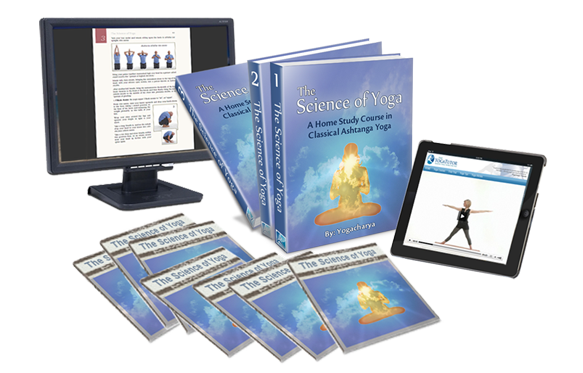
"The Science of Yoga is a course worthy of
leather binding and an honored place in the
finest libraries in the world
... It is indeed a masterful work."
Dr. John Michael Christian
AwakeningWithYoga.com
Learn More About
The Science of Yoga Course
|