[ Excerpt from The Science of Yoga, page 451 ]
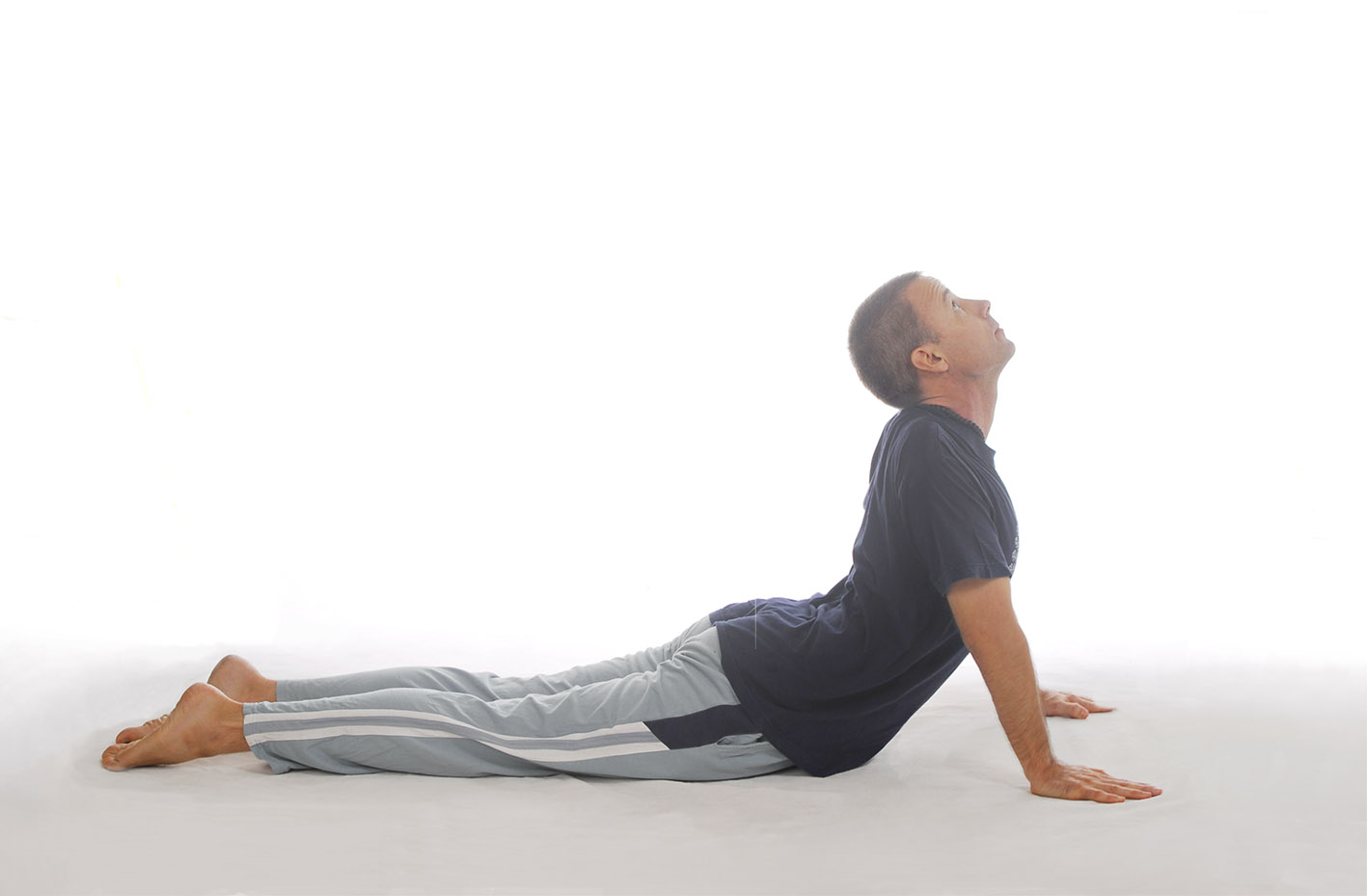
In the Sanskrit language bhujanga is the word for "cobra." When performed, the head and trunk resembles the raised hood of the cobra, hence this asana has become known as the "cobra pose."
Technique
- Lie face down on the floor in
- unmukha asana.
- Place the palms on the floor just below the shoulders, at or slightly greater than shoulder-width apart.
- On an in-breath, push onto the hands and slowly extend the arms, raising the head and upper portion of the body up off the floor.
- At the full stretch position, begin by looking upward, then extend the head and neck backward as much as possible.
- Try to maintain the posture for 20-30 seconds, increasing up to one minute with practice.
Note: It is important to keep the hips down, or in other words, the lower body from the pubic bone to the toes should remain in contact with the floor. If possible, the arms should be fully extended with the weight of the upper body supported by them. At the same time, the shoulders, back and all the unnecessary muscles should remain relaxed with the chest expanded forward.
- Return slowly back down to the floor in the reverse manner and relax in makara asana.
Effects and Benefits
This asana is a panacea for the spine. It can be very helpful especially in cases of posterior or posterior-lateral disc herniations. It makes the spine flexible, relieving back pain, lumbago and hyperkyphosis. It can also often be helpful for sciatica.
By increasing the intra-abdominal pressure, bhujanga asana could help relieve constipation and stimulate the liver, spleen, pancreas and gallbladder. It is also said to act beneficially on the kidneys and helps to normalise thyroid function and tone the adrenal glands too. Thus, this practice is potentially an excellent stimulator of the endocrine system and might be helpful in normalizing metabolic and physiological/hormonal functions.
Bhujanga asana may also be useful in cases of amenorrhea (lack of menses), dysmenorrhea (painful menses), leukorrhea (abnormal discharge), and various other utero-ovarian dysfunctions. It supports efficient blood circulation to the pelvic and genital region, tones the ovaries and uterus and regulates the menstrual cycle. When practised over time, it can also aid in easing childbirth.
The cobra pose helps tone the spinal region and develop the muscles of the back. Bhujanga asana also tones and rejuvenates the nerves of the pelvic area, increases body heat, stimulates appetite, and in the advanced forms of practice helps in arousing kundalini shakti.
Psychically, it gives magnanimity, nobleness and kindness and arouses or increases the capacity for loving...
[Continued...]
DISCLAIMER:
The contents of this web page are intended for informational purposes only. One should not engage in any yoga practices based solely upon the directions given on this web page or any other page of this web site. Anyone atempting to perform any of the yoga exercises introduced on this website assumes full responsibility and does so at their own risk.
---------------------
NOTE: This yoga article is an excerpt from The Science of Yoga, an online yoga training program with streaming yoga videos and 600 pages of step-by-step yoga instruction.

"The Science of Yoga is a course worthy of
leather binding and an honored place in the
finest libraries in the world
... It is indeed a masterful work."
Dr. John Michael Christian
AwakeningWithYoga.com
Learn More About
The Science of Yoga Course
|