[ Excerpt from The Science of Yoga, page 76 ]
Before we can begin relaxation, if we want to feel what it is like to really relax, there are a few things we do.
Environment is an important consideration for relaxation. Try entering into a state of mental peace and tranquillity on the sidewalk at the corner of a busy intersection and you will know what this means. So before trying to relax, all sensory distraction should be removed as best as possible. Start by retiring into an empty room where nobody will disturb you.
Dim the lights and close all windows and doors to outside noise. The temperature should be comfortable because during the relaxation body temperature will decrease and a feeling of coldness may occur. It works well to cover yourself with a light blanket right from the start, even though you may feel quite comfortable in the beginning.
Calming the mind remains the biggest challenge to the relaxation process. It is imperative to separate yourself as much as possible from daily worries and concerns. This is easier to say than it is to do.
A few simple techniques can prove very helpful though. First, the conditions described above should be created to discourage external distractions. Then negative emotions and angry feelings, if present, must be dispelled. If you find this difficult, then stand in front of a mirror and smile. This may seem like a silly thing to do (in fact, it is silly!), but you’ll soon discover that a forced smile soon gives way to a genuine one. (It works! Really, it does!)
After you have succeeded in partially getting rid of distressing thoughts, lie comfortably and, if possible, yawn. Rub your eyes gently and behave as if you were tired and sleepy. Gently roll the arms and legs, head and neck, from one side to the other, relieving the stress and tension from the body. Expand and contract the fingers.
After a few moments of these activities you will begin to feel a mood of non-action, where you’ll simply feel compelled to stop any movement.
Relaxation in yoga means training in non-action. Relaxation cannot come through force. Instead, behave as if you (yourself or your will) would be gone. The mood of surrender is essential in order to truely relax...
[Continued...]
---------------------
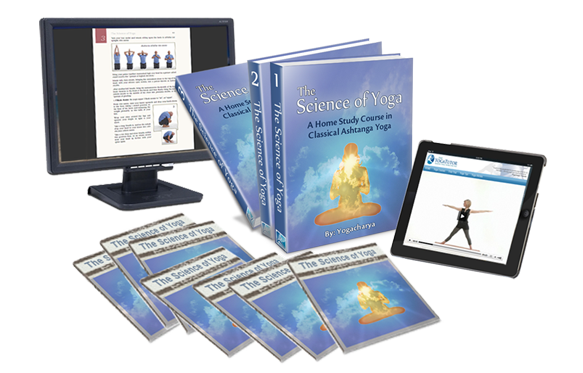
NOTE: This yoga article is an excerpt from The Science of Yoga, an online yoga training program with streaming yoga videos and 600 pages of step-by-step yoga instruction.
"The Science of Yoga is a course worthy of
leather binding and an honored place in the
finest libraries in the world
... It is indeed a masterful work."
Dr. John Michael Christian
AwakeningWithYoga.com
Learn More About
The Science of Yoga Course
|