[ Excerpt from The Science of Yoga, page 465 ]
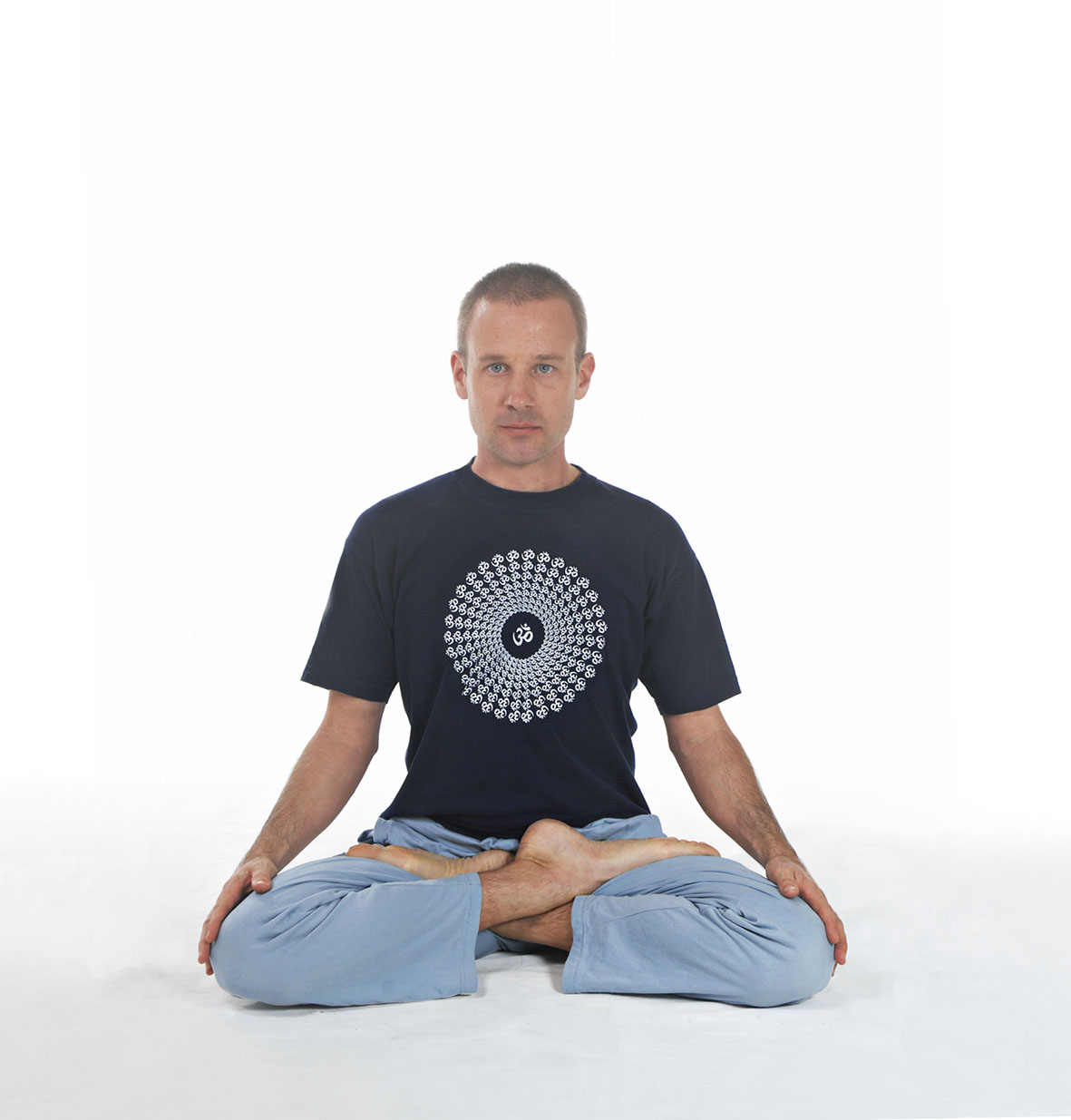
The highest meditation postures in yoga is padma asana, or "lotus pose." As mentioned earlier, this posture requires much preparatory work to first loosen the hips, lumbar region, knees and ankle joints. I remind you not to force yourself into this position and risk injury which will be a grave inconvenience in your further practice of hatha yoga. Use your own judgment, move slowly and only as far as you are comfortable into this position.
As with the ardha padma asana, if much stiffness remains when trying to perform the full lotus, then continue to put additional attention and practice upon the foot and ankle postures, the jattis for loosening the legs and hips, and baddha kona kriya (the butterfly action).
Technique
- Begin in sukha asana.
- Grasp the left foot and ankle, gently lift it up and cross it over the top of the right thigh.
- Next, reach down and grasp the right foot and ankle, placing it upon the left thigh.
Note: In the beginning, it is best to keep a rather loose position with the feet (i.e., not too high up onto the thighs). With time this pose can be tightened up and the feet brought snugly up into the hip folds at the top of the thighs.
- Sit relaxed with a straight back and breathe deeply and slowly for as long as comfortable.
- Note: the position of the right foot dominant (i.e., right foot crossed over the left) is commonly taught as the best position for meditation.
- In order to balance the flexibility in the hips, knees and ankles, the leg positions can be switched and the opposite position held for a few moments as well.
[Continued...]
DISCLAIMER:
The contents of this web page are intended for informational purposes only. One should not engage in any yoga practices based solely upon the directions given on this web page or any other page of this web site. Anyone atempting to perform any of the yoga exercises introduced on this website assumes full responsibility and does so at their own risk.
---------------------
NOTE: This yoga article is an excerpt from The Science of Yoga, an online yoga training program with streaming yoga videos and 600 pages of step-by-step yoga instruction.
"The Science of Yoga is a course worthy of
leather binding and an honored place in the
finest libraries in the world
... It is indeed a masterful work."
Dr. John Michael Christian
AwakeningWithYoga.com
Learn More About
The Science of Yoga Course
|