[ Excerpt from The Science of Yoga, page 471 ]
In the Sanskrit language pavana has a wide range of meanings. It mainly refers to "wind" or "gaseous form of matter." Mukta or mukti of course means "liberation" or "release." Therefore, this asana should be called the "wind release pose."
Pavana mukta asana is a great complimentary posture for the spine-extending practices of bhujanga asana, dhanur asana and viloma asana, which you have already been taught, as well as the chakra asana and sethu bandha asana, which will be introduced soon.
Technique
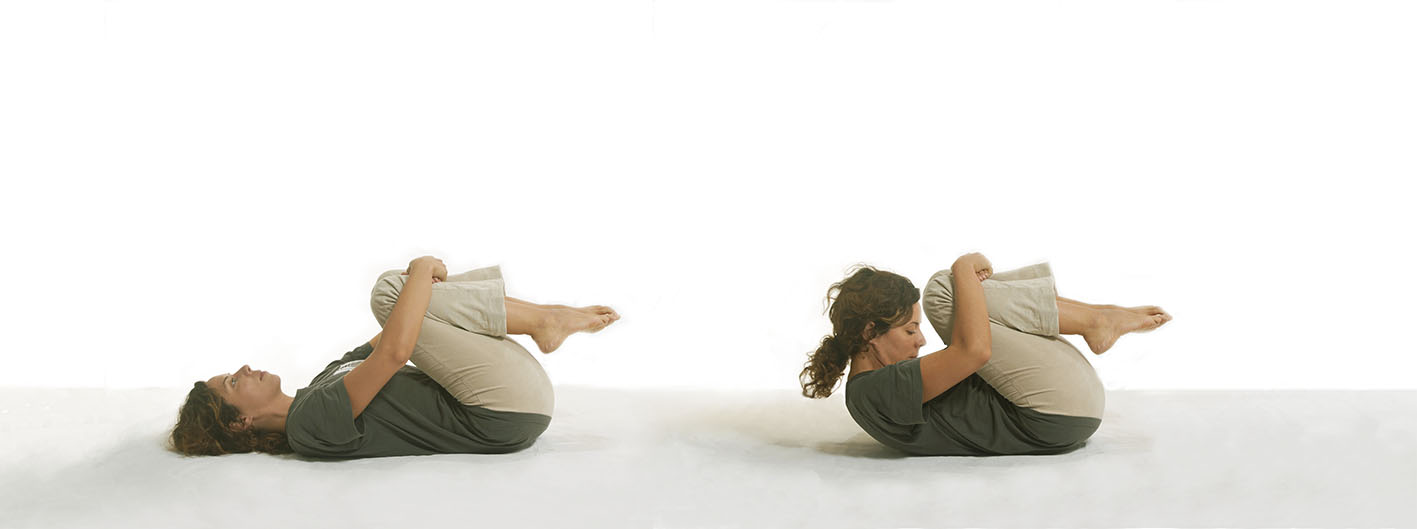
- Lying in shava asana, inhale and slowly draw both knees in towards your chest.
- Wrap your hands around the knees and pull them gently towards your chest, while at the same time drawing your head/nose towards the knees.
- Hold this position for 20-30 seconds, breathing in a calm and relaxed manner.
Note: this posture is held ideally about 1 minute, but can be extended up to 2 minutes if desired.
- Exhale and slowly straighten your legs (along with the head) back to the floor into shava asana.
Effects and Benefits
In ayurvedic medicine, pavana is the equivalent of vata, or vayu dosha, the gaseous humour of the body. An excess of vata causes dryness, disrupts digestion, produces muscle and joint pain, headaches, as well as insomnia, dizziness, confusion and depression. It also leads to premature ageing. Pavana mukta asana expels this excess wind and is, therefore, a great aid to overall health and longevity.
It also quickly expels the gases from the digestive tract. Those who suffer from indigestion, stomach acidity, flatulence, constipation, and belching, colonic accumulation of gases, gastritis, gastro-intestinal ulcer, as well as those who feel nauseous and the need to vomit should especially practice this asana. In cases of chronic flatulence, it can be performed alone, immediately after meals until the gas is released.
Specifically, the practice of pavana mukta asana regulates the flow of apana vayu (the downward flowing wind), giving an over-all feeling of wellbeing and relaxation...
[Continued...]
DISCLAIMER:
The contents of this web page are intended for informational purposes only. One should not engage in any yoga practices based solely upon the directions given on this web page or any other page of this web site. Anyone atempting to perform any of the yoga exercises introduced on this website assumes full responsibility and does so at their own risk.
---------------------
NOTE: This yoga article is an excerpt from The Science of Yoga, an online yoga training program with streaming yoga videos and 600 pages of step-by-step yoga instruction.

"The Science of Yoga is a course worthy of
leather binding and an honored place in the
finest libraries in the world
... It is indeed a masterful work."
Dr. John Michael Christian
AwakeningWithYoga.com
Learn More About
The Science of Yoga Course
|